How we migrate websites to Craft CMS
5th May 2026

3rd November 2025
Roughly a 7 minute read by
For years, brands have obsessed over chasing SEO backlinks in bulk, often asking: how many backlinks do you need to rank?
The truth is, this outdated focus on volume over relevance no longer works - and in fact, it can harm your site’s trust and visibility.
Today, the most effective link building strategy is one that prioritises topical relevance, link quality, and natural link building. The days of spray-and-pray link acquisition are over. To build topical authority, you need to adopt a long-term, intentional approach grounded in content alignment and authority building SEO.
This is where digital PR comes in. By aligning hygiene, hub, and hero content with a smart digital PR strategy, brands can shape a sustainable framework for earning high quality backlinks - and build trust with both users and search engines.
Buying backlinks, relying on outdated directories, or chasing link quantity over quality might have delivered short-term wins 10 years ago, but today, these tactics are obsolete.
Search engine algorithms have evolved to understand search intent, context, and the true relevance of a link.
Mismatched or irrelevant SEO backlinks no longer boost performance. In fact, they can actively harm it by diluting your site’s trust signals and undermining topical authority.
This is especially critical in industries such as healthcare, finance, legal, education, and technology, where users (and search engines) demand accuracy and credibility.
To drive sustainable growth and long-term rankings, brands need to move beyond domain authority and prioritise niche-relevant backlinks that align with their content themes. That means earning links from credible, contextually relevant sources that strengthen topical authority and reinforce expertise in your field.
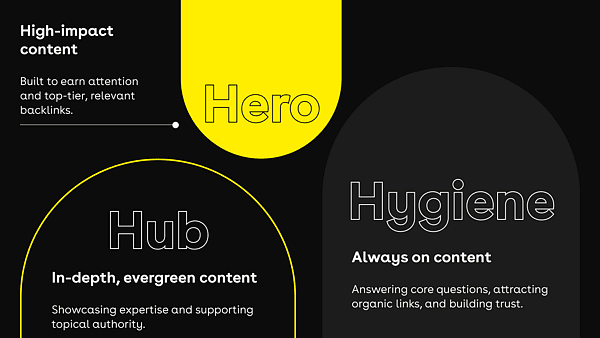
To shape a strong digital PR link building strategy, your content strategy needs to be structured with purpose. The hero, hub, hygiene model allows you to build content that naturally attracts high quality backlinks and supports topical relevance.
This is your always-on content. Answering core user questions (e.g. ‘what is a backlink’ and ‘what is topical authority’) and solving common problems, hygiene pages form the bedrock of your authority building SEO. They’re essential for natural link building because they attract organic links over time.
These are in-depth articles, guides, and regularly updated content clusters that demonstrate deep topical expertise. Hub content should be part of your always-on SEO strategy, helping to earn niche relevant backlinks while supporting topical authority growth.
This is where digital PR drives the biggest impact. Hero assets (such as data-led stories, interactive tools or thought leadership campaigns) are built to generate attention and high quality backlinks from more mainstream publications. But critically, they must align with your site’s niche and themes to support your overall link building strategy.
Each layer of this framework works together to earn relevant, trusted links that search engines understand and reward.
What is topical authority, and why does it matter? In SEO, it means becoming a known, trusted source on a specific subject or niche. A key part of building that trust is through acquiring niche, relevant backlinks that support your content themes, reinforce your subject expertise, and signal credibility to search engines.
Topical relevance in link building ensures that the websites linking to you are contextually aligned with your industry or subject matter. Google uses this to determine if you’re truly an authority - or just trying to play the system.
Relevant links:
Irrelevant links:
By prioritising link relevance, you can shape a natural backlink profile that supports topical authority SEO.
A smart digital PR strategy does more than boost brand awareness - it’s one of the most scalable ways to earn backlinks that support SEO. This approach focuses on building editorial links that are both high quality and topically relevant.
Effective digital PR link building tactics include:
These tactics don’t just deliver SEO backlinks, they elevate your brand and establish authority building SEO signals that are hard to fake.
The result is a link building strategy that feels earned, trustworthy, and long-term.

The strongest evidence of digital PR’s link-building power comes from real-world campaigns, such as our work with lifestyle brand MUJI.
To support their travel and sleep product ranges, we launched the “Journey to Better Sleep” campaign, centred on a public survey exploring how well people sleep on holiday.
The data sparked timely lifestyle conversations and aligned perfectly with MUJI’s brand themes of rest and wellbeing.
We turned the insights into a compelling, data-led story, supported by a dedicated landing page. Targeted media outreach then delivered widespread coverage across national, lifestyle, and travel media including Yahoo, MSN, Daily Mirror, and Daily Mail.
The results were transformative, leading to
Take a look at the full MUJI case study for more details.
A strong SEO strategy doesn’t happen in isolation. Understanding the competitive landscape is essential. Here’s how to check competitors’ backlinks effectively:
But don’t just copy their links. The goal isn’t to mimic - it’s to find gaps where your digital PR efforts can earn niche relevant backlinks they’ve missed.
And stop asking, “How many backlinks do you need?” The real question is: “How relevant and valuable are the backlinks you have?”
Success could (and should) be measured by:
SEO today isn’t about gaming the algorithm - it’s about earning trust naturally. When it comes to backlinks, that means:
A thoughtful link building strategy, supported by carefully structured content and a strong digital PR strategy, allows brands to build lasting visibility.
If you’re serious about sustainable SEO growth and building online authority, it’s time to:
Want to know how to gain backlinks that matter? Start by becoming the most trusted source in your niche - and let your links reflect that.
5th May 2026
20th April 2026

7th April 2026

31st March 2026
